
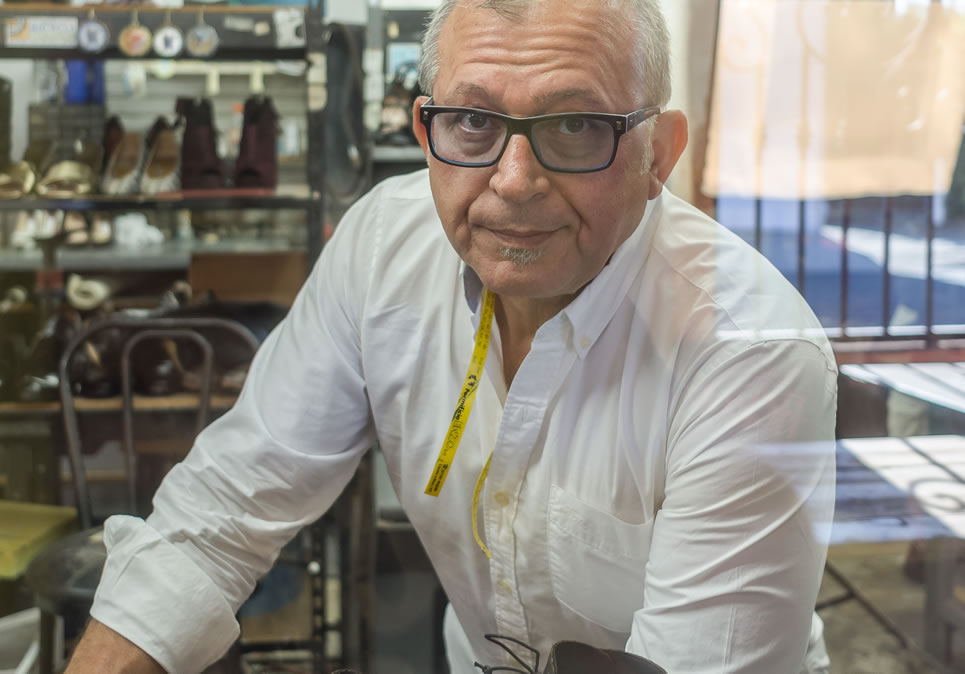
A household name among Hollywood celebrities and fasionistas around the world, Pasquale has been named “The Best Shoe Repair in the World”. As Christian Louboutin’s trusted cobbler, this Crunch delves into Pasquale’s journey to success.
We had a typical Italian breakfast (coffee) for this interview at the Pasquale Shoe Repair store in Mid Wilshire, Los Angeles.
I’ll make this as quick as I can, as one thing for sure is that I cannot afford your hourly rates!
No no, that is fine.
Can you state your name and what your profession is?
My name is Pasquale Fabrizio. What do I do? I am a tradesman, I am an artisan, I am a creator, I am an artist, as a few things. But traditionally I am a cobbler, but it involves all of the above. I think people don’t realise the extent of the creativity that is involved.
Normally we’d have brunch together but today we’re in your store in LA. What is breakfast for you? A typical Italian breakfast?
None. A coffee. Breakfast is around 1pm, a snack around 5pm and dinner around 8pm.
Can we have a bit about you growing up, family life, aspirations, etc.?
You know, it’s all embedded. It’s in your DNA when you’re young you don’t realise what your calling is, what direction you’re going to head into so it really becomes an awakening as you get older and start gravitating towards things that interest you more and more. Looking back at being young, all of that was inside of me anyway. As a kid growing up we’d go to church on Sunday and Saturday night, we had to get our shoes cleaned. I’d sit on the floor in the kitchen, put newspaper out, and clean everyone’s shoes for Sunday morning. Then as I got older, I got wiser and started charging my sisters to do their dirty work. But it was already there, that was my little inkling, but it didn’t register. As you get older you start to have that fascination; I had my first custom pair of boots made when I was 14 back in the 70s. It was a cobbler in our Downtown area of Montreal; they were blue suede platform boots which were a prized possession for me. I held onto them for so long that they went out of style. The allure of that whole thing was always there and what stands out to me when I look back. My uncle’s business here has been going since 1961 and I took over in 1993. He had 2 departments: one location was the repair (which I hate calling it) and the other one was where he did custom work. His wife passed away and he couldn’t manage the two (nor did he want to) so I took over the repair portion but they were always separate. We had the same namesake which made things a little bit complicated but we divided up the work. A few years later he got sick, had heart surgery, had a bypass, and was on medication. He ended up retiring and we had a lot of requests but I had to push them away. Custom, repair, and manufacturing are all different animals even though they’re affiliated.
When would you say you had that calling that you knew? I am thinking about that 12yr old self. Did you ever imagine being who you are today?
None. When I was young, I always felt like I was at a disadvantage as I didn’t know what my calling was, I had no direction, and to me it felt like a failure not knowing what you want in life. I was looking for opportunity and so I kept coming here to California from Canada every 3-4 months. I would stay with my uncle and he proposed the idea back in late 92’ that ‘if you want to come out here, take the business over’ and I said “you know, I am not familiar with it” but he said I should talk to my wife, which I did and we decided in a couple of days that we were going to make that jump. As that started to progress and eventually I am falling into my own, I slowly realised that not having a direction was the direction. That was the gift that I didn’t realise. If you go to school to study to become a doctor, scientist, or lawyer, then that is all you look at whereas my screen had nothing. You would sample all these different areas, and had I focused in one area then I never would have ended up where I am today. The disadvantage became the advantage.
You mentioned a bit about family being involved. How do you find that work-life balance, especially in a family business as I know your children work here too.
It has always been this way. There was no point where you say it wasn’t and it became, it was just always that. You grow that way, nobody questioned it, and everybody knew their calling. Once I came out here and the kids grew up in it, it wasn’t forced upon them but they just grew up around it and it was a natural progression for them. Obviously, the bug is in them as well as there’s a passion for it. It goes way beyond the repair – which I like to call the refurbishing.
It’s really interesting as you didn’t have anyone immediately surrounding you in the business, but your children have picked it up from you and who knows how many generations it may continue like that.
Right. In a different time and place, yes it would have gone on for several generations but currently I think all our trades are in dire need and in jeopardy of being obliviated just like a lot of older style businesses that will eventually disappear and we are on the cusp of that. Our industry, watchmakers, seamstresses, tailors and all these people are on the verge of being wiped out.
Apart from dedicating time to being on a blog like this to hopefully get a few more artists in the industry, is there anything else that you foresee that could change that trajectory such as government intervention or education.
No, none of the above. I don’t see it that way happening. Arnault, who is the LVMH chairman, invested about $80-100m in Europe/France by opening a school to get young people interested in all of his trades. Hermes are handmade and you can’t make that in another country as it will lose its value. In our industry after WWII, the USA had around 150,000 cobblers, but as of last count around a year ago it was under 1200. The old timers are closing because they’re sick and nobody is coming in. In part, what I think of that industry is the image that it has always had, and that’s what resonates – cobblers that started after WW2 and actually the big trend started after the great depression when there was no work and people just started soling shoes as you kept your shoes as long as you could. A lot of the people that got into the industry jumped into it out of financial need. After that, they weren’t experienced, the work was hacked and it built a whole persona that these shoemakers and cobblers were hacks. Around 80% of the work that came out was always botched and looked terrible, but people accepted it because it was nothing; this hurt the image and it was downhill from there trying to always rebuild what a real cobbler should be. Looking at the history of it and asking where it is going? In Europe with all the tradespeople, not only footwear but the seamstresses, tailors, and all the artisans – there’s a deficit of 150,000 jobs. I follow this a lot and people are saying if this is not corrected within the next 5 years, this will be a disaster as there are over 600,000 baby boomers retiring and nobody to fill these posts. The LVMHs of the world, the Hermes, Gucci’s, won’t be able to put out work anymore. The price is going to skyrocket and will be limited to a few, which goes to say the industry is rising. Where is the disconnect from young people looking at this as being a viable business to build a career, innovation, creativity, artistry, talent… all of these things are tied in but nobody recognises that. When Arnault, the chairman of LVMH, started this school, the success was not there and it is still not there as it hasn’t drawn anybody in yet. What I think has to happen is education in the sense of opening up what the possibilities are to young people by being creative. How do you show that? You need to present them with something different. If you look back, where we are in Hollywood is a driving force to a lot of that stuff, and they’re losing that too by the way.
Do you know who they’re losing it to?
Finances, economy, they’ve dissected the industry as the studios no longer produce. They give a small budget to independents and make it work, whereas in the past you were assigned to a studio, you were under contract, they drove and built your career, did all the above. When you had costumes, the studio built the costumes for the performers and the performance. Now you don’t have any of that – everything is pulled off the shelf and to resemble or reflect our current times; it is wiping out that whole industry and there is very little production left in California. That is what I have seen over the last 30 years. The restaurant industry (a chef, a cook) has been the same work for the last 2000+ years since man started walking. It was the ability to hunt and gather – you need food. But it is a tough, dirty job, as there is a lot of preparing, buying, and consistent 17/18hr shifts around the clock and the restaurant industry was diminishing as they could not find anyone to commit. Around 10 years ago, Hollywood started creating these cooking shows and competitions so a new generation started looking at it and thinking “wow this is pretty cool, I think I’d like to do it” and everyone started jumping into it where being a chef became the coolest thing to do and it flooded globally, not just in the US, despite it being an old trade. That is what it took to wake up the youngsters. You can see it now where food trucks are called food trucks, they used to be roach coaches back in the day because they would deliver or bring food to worksites where people didn’t have the opportunity to move away. It is the same truck doing the same work but now it is cool as it is a ‘food truck’. Nothing has shifted but only the perception that it is cool. Our business is the same – nothing has changed. There’s no new technology, there’s no AI. It is eye and hand coordination. A lot of it you can simplify with AI but it still needs the creativity and the vision of young people. You do see a lot of young people that are talented and put together fashion or clothing or however their brain is wired, they are intrigued but don’t know where to harness that energy or know where to go with it. If Hollywood were to step in they could turn that corner really fast by showing the insides of it. My question to anybody: how many people does it take to make a shoe?
…20?
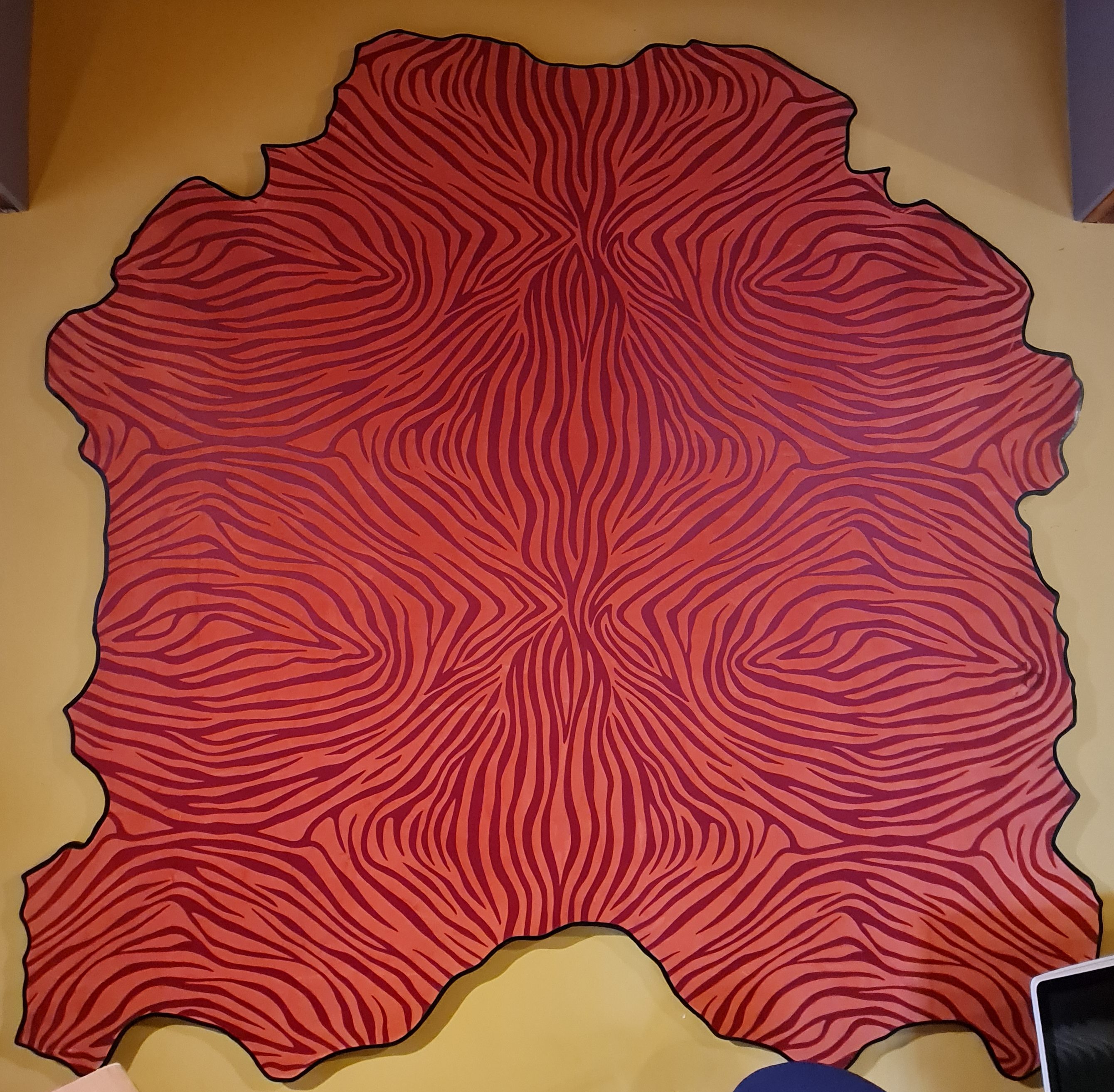
20? How about 200+. Nobody has a clue because nobody knows the inside. How does it take 200? If you were to walk them through stage by stage by stage, how many people are involved in the creation and process of making that shoe? It touches over 200 tradesmen before it’s on the shelf. Once you start understanding all these steps, you see it is fascinating. Look at the tanneries and how the skins come in, just learning or watching that part… I’ve done it my whole life but I started manufacturing in late 2007/2008. For 15 years because of my interest and determination in not accepting the standard, I would always dig deeper to find more solutions and more answers. Look at how they make skins, understanding the process and the costs – why are they expensive? Why does this one cost so much vs the other? What are the differences? People don’t ask these questions firstly because they don’t show it, but it would draw interest as it involves everybody – people like leather jackets. It is just a piece of trivia if you call it that, but it allows you to look into a world that nobody has any clue of. This is one piece that you are looking at [Figure 1.]. It is a whole cow, that is where they shot it to kill it. This was considered a sample in tanning of how they did the print but the cost of delivering was too high and they scrapped the idea so they said I can have it. If you look at cows and how or where they’re raised it is very humane. It is not what people call the green movement, or vegans. To me that is the biggest crock of shit that they put out there. When you look at cows, they’re raised on open range farms, fed top notch quality food and are raised for skin not organ, but in the meantime the whole animal benefits from this. If you look at the same cow raised in South America, they are raised for food not skin; corralled in large areas and they have barbed wire, monitored by helicopters as they’re branded on top which impacts the quality of skin, the pelt, as less expensive.
Where are these cows from?
Northern Europe – we have Austria, Germany, and all of these European cows that are raised for skin. That is where the fascination starts, just looking at where the skin comes from.
Moving on, some would say I am sitting with the best shoemaker in the world. At what point did you feel successful?
I still don’t. These are titles that they throw at you. We had that done by W Magazine as best in the world, GQ for Men as best in the world, Town and Country best in the world… To me it is just what you do. They recognise it, but is it not the end all. The passion that I talk about, why they recognise it as that, is as I refuse to take what is there. When I started manufacturing I had a design for a heel that all the shoe manufacturers in Europe said I couldn’t do. It took a few years before I finally came to the point where I found it. That same media that says ‘you’re the greatest in the world’ are blown away once you show them your product, but still, the audience of people hasn’t seen or understood what that capability is as it isn’t marketed and it needs that marketing tool. One of them is where the whole shoe was made of glass. It wasn’t a fixture glass, it was real glass that was a walkable, wearable, completely transparent shoe. That was a five-year mission to start what I believe is the first ever (and nobody has ever duplicated anything like it), how do you create that? What materials? There are a million questions that set me off on the journey as a madman because I was obsessed with it and wouldn’t back off. Luckily my wife supported me and we invested everything that we had over the years at the verge of literally losing all that we had worked for. It was satisfying to at least achieve it and then continue with it. All of these small challenges – people don’t understand what is involved. That is the ticket to show an audience what is really involved as there is a lot of creativity at every aspect and every turn. We need innovation and people with minds that say ‘lets get this done, how do we make it work?’. I went to a company in Torino that made surgical instruments and I asked if they ever made a heel, to which they said no. As they weren’t in the industry, they weren’t obstructed and they made me a titanium heel.
Cinderella should have come to you instead! Would you say your mindset would ever allow you to feel successful at some point?
No. This is like any artist or anybody that is creative as the creativity continues and you don’t stop at it because you have reached one level. You continuously have different ideas and visions and keep pursuing it. You never feel like “I am going for this” and I stop. The ones that do that are the ones that never get there, and secondly they are misguided as to succeed in any career you have to have that passion and that passion never stops. It doesn’t go away because somebody pinned a medal on you. It doesn’t.
Christian Louboutin and most of Hollywood know your name. Is there one big break that you had from anyone or a singular design?
It was all gradual. With Christian we started with him in 1997 when he started his career on Burton Way, a small boutique selling one or two pairs a week whilst we were servicing any challenges that they had; we grew with them all along the way. That ability to fulfil their need and they continued supporting us as we continued to support them. It was a partnership for both of our needs as we service their customers. In the end, that services them which gives them the image of a solid company. But that is only a fraction, a fragment of their success as he’s truly built an empire on his creativity and he hasn’t stopped yet – he’s reached a plateau that no other shoe designer in history has ever achieved what he has, and he has more under the belt that is coming out. We just got invited to one of his private events coming up in January, about 40-50 of us. You share that excitement through the passion. It is not about the outcome but about how you keep everything exciting. If not it gets boring.
Is there anything that gives you that spark of creativity, or can you just pull it from thin air as that’s the ability that you have?
It’s there. It always has been. I’ve got to stop many times because I can’t share any more with my wife. Certain ideas, she gets scared at as she knows I could run with all different stuff, but tells me “I don’t want to do this, you need to stop as it could risk everything that we have worked for”. I still don’t see that as the force inside says you’ve gotta keep doing it. Something is to happen – your original question which I always deviate from as there’s so much – what changed? What really catapulted us was in 1999; we were in our location where my uncle started on 3rd St and was there for 30 years but they demolished the property. Because we were only on a month-to-month, we only had 30 days to get out. Back then with no computers or registers with names, from one week to the next we disappeared and nobody knew where we were, our business completely disappeared. In two weeks we found a new location on Wilshire and Detroit– but nobody. I told my wife Lina that if this doesn’t happen, we’re gonna have to cut it and close it. We can’t keep bumping, but we kept the workers going and still paid them when there was no work coming in. She had an idea “why don’t you go and speak to the contractors out there and see if you could put a banner on the fence” so I went and the guy said “sure, knock yourself out”. I put two banners, one on each end, and literally the week after they started finding us and we started climbing back up slowly. A few years after that, we had a big spread in the LA Times but it was about gentrification of the city and how we kept getting kicked around. It was a full article of around 5 pages. To this day, from over 20 years ago, we still get people from this article. That really created a momentum that we never turned back from, and the key that ignited everything. These start the excitement – that little bit brought eyes into the world that we live in. That’s why I said if Hollywood doesn’t get involved with the creativity, it’s done.
Now I am fairly new to Hollywood, and outside perception is that celebrities almost have a God-like status. How do you find working with them?
I’ll tell you: the young ones are completely full of shit; they haven’t been taught anything, there’s a lot of arrogance and you see a lot of them come and go. They think that once they’re on top they’re invincible. They make working with them a nightmare and as I get older I choose to not work with certain names. When you look at the older, more professional artists and celebrities that have been around for years and years, those are the ones that are not only humble, but human, touchable, pleasant and great people in general – and I think that is why they have longevity in their careers. The young should take notes and watch it, but everything is changing with these influencers and everything. You gotta take a cue from people that have been around for a long time, why have they been around for a long time? There’s a lot of curb appeal and it’s not of talent as talent comes and goes.
How does one get into the industry if your family aren’t already cobblers and you don’t feel that initial calling? You mentioned the LVMH school. Any top tips?
They have the money and the means, and they created it, but it didn’t trigger. It hasn’t created an avalanche yet. You have to have it ready, but I don’t think that’s how you create the excitement and that’s why I said earlier it’s through the industry, of creating even competitions. You do all these cooking shows, you have a lot of young creative minds. Once you put them to the test they will come up with stuff you haven’t seen. One of the trade schools downtown wanted me to teach a class to a handful of kids which is wonderful, but I can’t deviate for a few and we can’t stop to do an internship as we are crammed. We started a few times but it takes you away from what you need to do rather than trying to instil this. The need has to happen by allowing a young person to say ‘make me this’. If they can create this, how do you take that and bring it into the real world? They have no clue and are always scratching their head. That is their roadblock, as they can never surpass that. Here, you don’t have the infrastructure: the materials, craftsmen, and knowledge. Europe still has more because they’re 2nd through to the 7th generation still doing the same thing and it’s an intricate part of their culture and their economy. I still believe you have the intrigue here, but an LVMH of the world is to participate in saying you recruit by television, competitions, or having them do an internship with the major design houses. Once you start that, you march more than one person in which will allow a circle of people to come in and filter through the bigger companies that have the infrastructure to teach, to build, to show. That I believe is the essence, but how do you get there?
Do you think university would be a pathway these days?
I’ve done some lecturing at a school of design in Urbino in Italy. I never spoke publicly and they were scared as I didn’t have anything prepared. They said they’re students and if you don’t attract them then you’ll have an empty auditorium in 10 minutes. They were all in footwear design, but I went on for 3 hours and nobody left the room – in fact they were so interested that they stayed after to ask questions. What you tell them is not scripted, but just the real thing. The other part is Anthony Bourdain did a wonderful job with a cooking show where he took food and culture around the world, and he was really successful as he had a character and a passion for food and people; that magic you cannot create. His show was so successful and the roots that he planted for this industry, to walk through all the different steps and introducing it that way as a documentary becomes fascinating. In order to do that, one needs to understand them in order to tell them, because if it is scripted it doesn’t come off that way. A lot of people tried and it didn’t work.
You’ve mentioned a lot about digging deep. Are there any key traits that you think you have that set you apart in your industry?
I think it is the creativity and always taking the challenge. The harder it is, the better! My motto is if it has been done, it can be re-done. You don’t let the obstacles stop you from progress.
Have you seen an impact on business or attitudes due to fast fashion?
Totally, they’ve destroyed it. They’ve literally crushed it. Going back to these big companies, they’re not creative. They’re dominating and greedy. The whole thing is really driven by money. Like a true artist, you don’t become an artist because you want the fame and fortune (and those that do, don’t make it). It has got to be something you want to do even for free. That way, it is not work or a career but just who you are. When you look at fast fashion and big corporations, they are the utmost greediest, disgusting, deplorable business owners because they shoot stuff out and feed the market full of garbage on top of garbage and they have the power and means to bamboozle the young and make them believe that this is what the cool stuff is when it is not. The coolness is in the person, but they’ll never show you that. I’ve seen a lot of young people come through the door and one that always stood out in my mind was a young woman (early to mid-twenties) who was on the heavy side. What was so magical about her was how she wore her fashion. She created her own look, her style, and the confidence she had stood out like “woah!”. That is what fashion is all about – you make it. I had other executives, top brass, from Sony Columbia, and she would come in literally every morning seeking advice “does this match with that? Does this go with that?” you tell her “yes it should, but do it this way or do it that way”. No matter what she wore, it never looked good as she didn’t carry it that way. She didn’t own it but just wore it because they were fashion labels. That was part of it, but how do you tell someone that the labels don’t make the person, the person makes the clothes. How do you get to that? I think it’s through the creativity to allow people to become that, they have unchained it in a society where you see a lot of that freestyling all kinds of weird stuff. When I look at fashion today, I find it deplorable. It has nothing to do with creativity but as with movies, it’s all about graphics and no story behind it – all how real the blowing up looks; there’s no acting ability and it’s the same with fashion where they’re just doing ‘stuff’. How exaggerated can you make it? They’re flashes that keep, but never gravitate because it is that outrageous. When you look at fashion that way, they try to inspire it with young creativity but it can’t sustain itself as it doesn’t make sense. Fashion has lost that creative mind of saying let’s build it this way and keep it to a certain look. You turn it, bottom line they want more money. The LVMHs of the world are the same thing as they control it. How much can you control? If you don’t start intriguing the young in opening their eyes to this world, it’ll end. I honestly believe it will end.
Two-fold question: the first one is about setbacks, have you ever been disappointed in piece of artwork or a client has given you feedback that you’ve been taken aback by?
Myself or them?
Both. Perhaps something that wasn’t quite where you wanted it to be. And secondly if there was a client that felt the same.
I eliminated the middleman. I deal directly with the principal or whoever is creating and is the visionary, don’t waste time. If the designer has the final say, that is who you work with. If you have to go to an assistant to that one, to this one, then everything gets diluted and they always point the finger back at you, because they have no concept of what the vision is. This is the first question I ask and if they’re not, then I tell them to send the visionary, and if they’re not interested, to find somebody else as that’s where the problems come in. All of them. I’ve seen it repeatedly and I refuse. They don’t have the vision, so when you ask the visionary the question on how to do this, they will give you direct input and then the challenges that take place on that – they are able to dissect it and agree with you, instead of challenges that won’t work and things will have to happen another way, they have to go back and get approval but they can’t translate what the real problem is and what the outcome should be. Repeatedly, that’s the heartache but I don’t even go there anymore.
That lack of mutual passion between the creator and designer seems to really throw a spanner in the works.
I worked with Madonna and many others, but I was working with her designer in particular; Arianne’s won Academy Awards and as a costume designer she is up there. She’d come in and say we’re doing the fencing in the James Bond movie ‘Die Another Die’. I had a whole series of questions on how she wanted things done, but she looked at me and said “you know what, you deal with her”. Madonna was at a rehearsal studio at 2pm at La Brea. We were waiting in her dressing room, she came in, and the first thing she did was throw a pair of boots across the room and say “what the fuck is this?!” I said “oh my god, we’re gonna have a nightmare”. We did all the measurements, asked all the questions, and got everything done; two days later we did our test fit and she said “you’re on the A-list” (whatever that means, do I get a Christmas card?). Her reputation of being a bitch ended up being the greatness of working with her because she knows exactly what she wants. That simplifies your life and hers, and that’s why she said “you’re on the A-list”. With time, realising we executed exactly what she wanted and her vision, whereas other people don’t have that vision and that is what makes the working relationship even stronger and easier rather than the convoluted nightmare.
On the flip side, have you had any outstanding pieces where you’ve really thought that you’ve outdone yourself?
One big challenge was 7 or 8 years ago with Nicki Minaj, who was performing at an award show and they had created a full-body latex suit, and now we had to do latex boots… and it was full body. It is not leather, latex is a balloon and a material I had never worked with. It was presented on Friday afternoon, and it was needed for Sunday. I got to measure her 4 or 5pm on Saturday and we had to get to work from then and deliver by noon on Sunday ready for dress rehearsal 1pm Sunday. We worked all night trying to find remedies for stitching seams and joins as with other materials but this wouldn’t work on latex. We tried all these crazy things and it wouldn’t come together because as you pull it, it just comes apart. I had a breakthrough late morning. My first son Marco cycled, almost professionally (he was the California champion in ’13). I said to him “when your tubes get flats, I know you fix them but what is the patch made of?”. He explained how it’s repaired and the patches but didn’t have any. I went down the street where there is a tyre shop and asked “when you patch tubes, what do you use?” and he said they use this type of cement and pointed me to an AutoZone down the street. I picked up this can of cement for rubber. Once we did our testing on it, it bonded better than stitching and that’s how we overcame the problem. It was part of the excitement of being able to find the remedy in the short period of time. The other big challenge was trying to slip into latex and come out of it is difficult and tricky, and if someone’s nails or anything snags it you’re done and would have to start over. They were hounding me every 20 minutes, just kept calling me and I said “don’t call me again, I know what my marching orders are and I’ll let you know as soon as it is done”. They kept calling but I shut the phone off as it was annoying more than anything, but we did deliver it for 12 and they got into rehearsals. From 12pm to 5pm I was in a panic mode because if they do something that perforates or does anything, that will be sitting on me – they point the finger at you and nobody else. At 5pm they sent me pictures of her performance with the outfit and the boots on, and it was my son’s birthday so we were in a restaurant when they sent the picture and I said we can now finally relax. It is not about the money or who did it, it’s about the pressure you are under to perform and deliver as your name and reputation is on the line every time you do something like that. When you look at that, there is no boundary and you just do what you have to do. The industry is a small community, like with every industry they all know each other and who did what or who screwed up what. As they realise where it is, that revolving door starts getting bigger and bigger and more and more come in, the demand gets greater, the requests get more outrageous and you keep doing stuff… that is the excitement for me, the challenge.
Did you have a mentor or anyone along the way?
No. I worked with my uncle for a few years but as he got sick I wasn’t able to watch as much. When he died a few years later, you know the cord was cut and you’re on your own. The passion was there and you just make things happen. You fall, you get up, you do it again. You do your best, and perform at your best capacity and if that isn’t good enough you keep trying harder like at any career. You can’t just give up.
Final few questions. You have done trips to Italy regularly to produce footwear. Do you feel anywhere else comes close to the quality that you have there?
Not at all. You can’t compare. What you have is the passion the Italians have which is why they’re famous for not only footwear, but for fashion, for food, because they take on that passion and they live it from one generation to the next, to the next, and innovation and how to make it better. That is what you get caught up in and that is why you see products and stuff being done that are outstanding and you can’t duplicate elsewhere. What we’ve talked about until now – it is not about the money, it is about the journey and I’ve travelled north to south in Italy for 15 years. I must have spent 3 or 4 months a year there, going back and forth for work there continuously, and that is the sad part for me: that creative process has slowed down whereas then it was alive and well and the true essence of it. You learn from these artisans as well as you teach them, but they’re open to it. Italians bicker and fight but in the end they come to the point where you’re both looking for the same result even though they challenge you on it. You look at every aspect and what I learned about the construction of a foot and the shoe is a wonderful thing, yet fashion doesn’t talk about that. Where LVMH pushes ‘handmade handmade handmade’ but other than that because it is off-limits to 99% of the population they don’t really listen or care, but there is a lot in that topic that should be put forward. It’s a bit like cars: you don’t have to be a mechanic to love cars or how to work it or take care of it. But if you have a passion for it, it’s there. Similar to your work Simran, there’s something that drives you to do what you do as most people couldn’t. It is in your DNA so you go looking for education, you go looking to better things, you go looking for how to go one notch further. It isn’t because you want the money or the fame, but it is because of the inner challenge that calls it. You can tell me anything you want because once you recognise somebody who loves what they do, that is what it is about. That is the whole essence of any step in your world, it is creative as well because your brain works differently – it has to be otherwise you couldn’t do what you do!
For that 99%, have you got any top tips in terms of footwear and feet care for the average Joe out there?
When you go back to the other question, like I said this is a conversation of my passion but when you go back to footwear and about the construction from China on what they’re building, there’s no structure in it. Your foot has 26 bones in it, and if there’s no structure holding it, these bones start to spread and as they spread you develop all kinds of pains and ailments, and to recorrect it is difficult whilst you always find discomfort. One with the other, when you look at a lot of these products, materials are not leather. They’re synthetics which are cheaper and you can make them look any way you want, but with synthetic on the skin and foot, it doesn’t breathe. Here lies the Stella McCartney’s of the world pushing vegan, selling you a pair of vegan shoes for $1000 that you can get at Payless for $50. There’s nothing in it. What happens is the foot inside doesn’t breathe, the leather and the material is non absorbent and it’s 95% petroleum based which is not good for your health nor the environment. When you flip over on the other side, you start looking at why the quality is this way; quality costs money to do as you’re not cutting all the corners to get the most cost-effective product which is not healthy for you. In fast fashion as they have flooded the market with garbage, now landfills are full of garbage because of it. When you start looking at quality, which is why education raises the knowledge base of a lot of people, they can actively make their choices and decisions based on what you teach them or what they learn. There’s a lot of information out there that people conjure up and do their research saying “this is how to fix this” but they are the furthest from the truth as there’s only a handful of people that have a good source of knowledge and that’s where you have to dig it from. The whole world of the internet is out there and you look at it all “ooooofff” and you just mosey on doing your own stuff. You have to show the steps as when you’re creating to last from a sketch to the foot, and then the materials that are involved. Look at sandals made for men from way back thousands of years ago, it was always in leather – it is a durable, absorbent product that keeps your foot dry and takes out the moisture and rejuvenates itself. No other material does it. So why are we making stuff out of synthetics? It’s back to business and money; you can spend a little more, get a quality shoe, but people want a whole closet full of ‘stuff’. When you have a closet, you don’t even know what you have or what to wear. If you go to the resale store RealReal you’ll find a ton of stuff in there with price tags that say “never worn” which is a clear indicator that people are buying stuff that they don’t need and it is all out of pressure. We see it often with a ‘never worn’ price tag of $1000 but on sale for $400, and they’ve got multiple! It’s how powerful the marketing is, where people need to start understanding “yes I can have 7 to 8 good pieces and make them work with my outfits”. For men, it’s a shoe and a watch; for women, it’s shoes and a bag. You can mix and match all the fashion you want, but those two things are what makes any outfit stand out. Once you start showing it that way, they can be more creative with clothing and concentrate with the essentials that are strong and you don’t need the rest – a closet full of stuff. Again, it goes back down to the marketing. When you look at Europeans, they don’t buy volume, they buy quality. Go to Italy, a guy gets a suit tailor-made, hand-made and they wear that thing all year and still looks new – it never goes out of style and every time you wear it you go “woah!”. Nobody ever thinks “oh that’s an old piece of junk” but rather “wow, what a suit!”. That is the mentality, as they are not trying to impress by having ten suits, but impressing with one piece of artwork that looks and feels great every time you wear it. That is what needs to come out.
Any final closing remarks?
There’s a lot. For me, the questions you’ve asked are just scratching the surface. Literally the tip of the iceberg as each subject you can go really deep into, and I enjoy it because it is what has always intrigued me and got me to where I am today. I think my kids also picked it up, not because I preached to them, but they heard me preaching all the time and so they get it. They got the bug as they see the creativity – they’re a part of it. They’re on their own doing their own stuff, I just buzz around doing all sorts of stuff but when I am nearby they look at me as a validation. For anybody else, nobody cares, but they look at me. The training wheels are off and they’re on their own, but I can see they took it all in even when they weren’t paying attention.
Your passion is infectious.
Well listen, I hope to make it even more infectious.
Closing remark
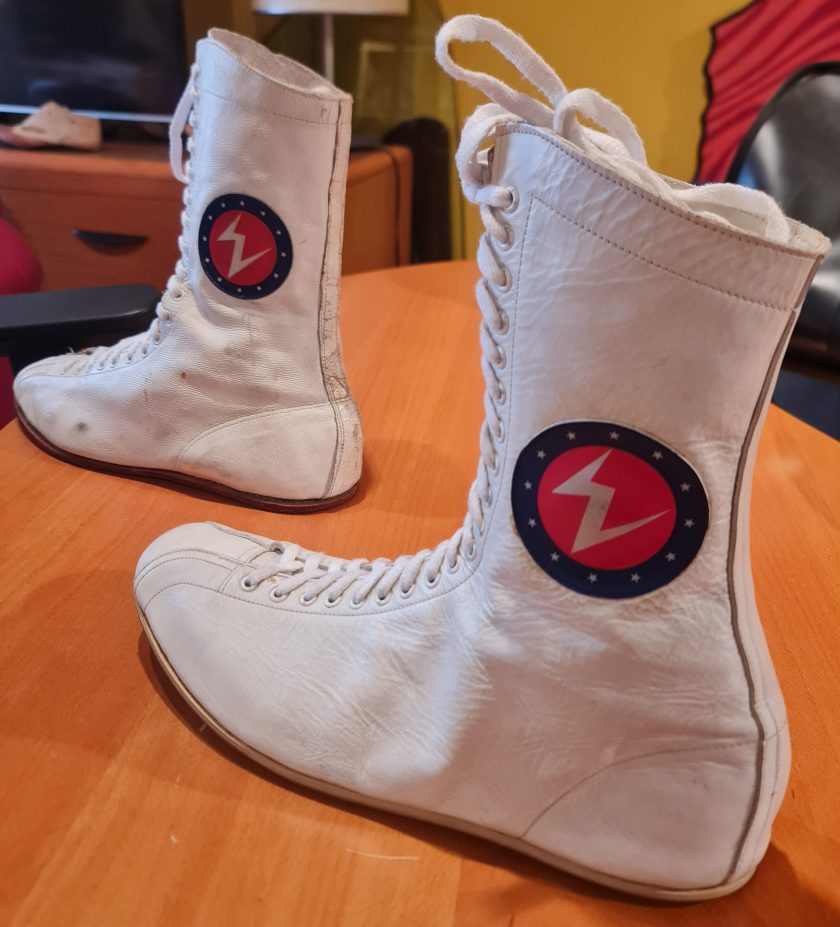
Following Pasquale’s insightful interview, he gave me a full tour of the studio. With too many incredible artefacts to capture, I just got the one picture! [Figure 2]. Back in 2001 for the movie “Ali”, Pasquale was tasked with recreating Muhammad Ali’s boxing shoes. In the front is one shoe from the 9 pairs that Pasquale made for the movie, whilst the background has one of Muhammad’s original boxing shoes.
 The Brain Crunch Brunch